


For the better part of a decade, I have worked with English teachers across the country on one of the odder professional development propositions in the field, integrating computer science into the ELA classroom. Most teachers arrive skeptical; many leave converts. Along the way, one activity kept producing the same electric reaction, no matter the audience.
The activity drew from the literary theorists who argued that meaning lives not only in a text’s words but in its silences. Even an absent word can ignite interpretation. I found this idea irresistible: leave a blank in a great line of literature, and the very process of hunting for the right word sharpens your sense of what the author was doing. That striving is the reading. I built an activity for teachers around this premise, calling it the Conditional Author. It used literary interpretation as a vehicle for understanding how conditional statements work in computer programming. Whether I ran it with a small cohort or hundreds of teachers at once, the response was invariably the same: something lit up in the room.
I always suspected it would make a terrific game. Something Wordle-adjacent, built for daily play. But I lacked the coding chops to build it myself, and that was that—until AI coding tools arrived and suddenly made such a project not just conceivable but achievable. A few weeks of tinkering later, the game existed.
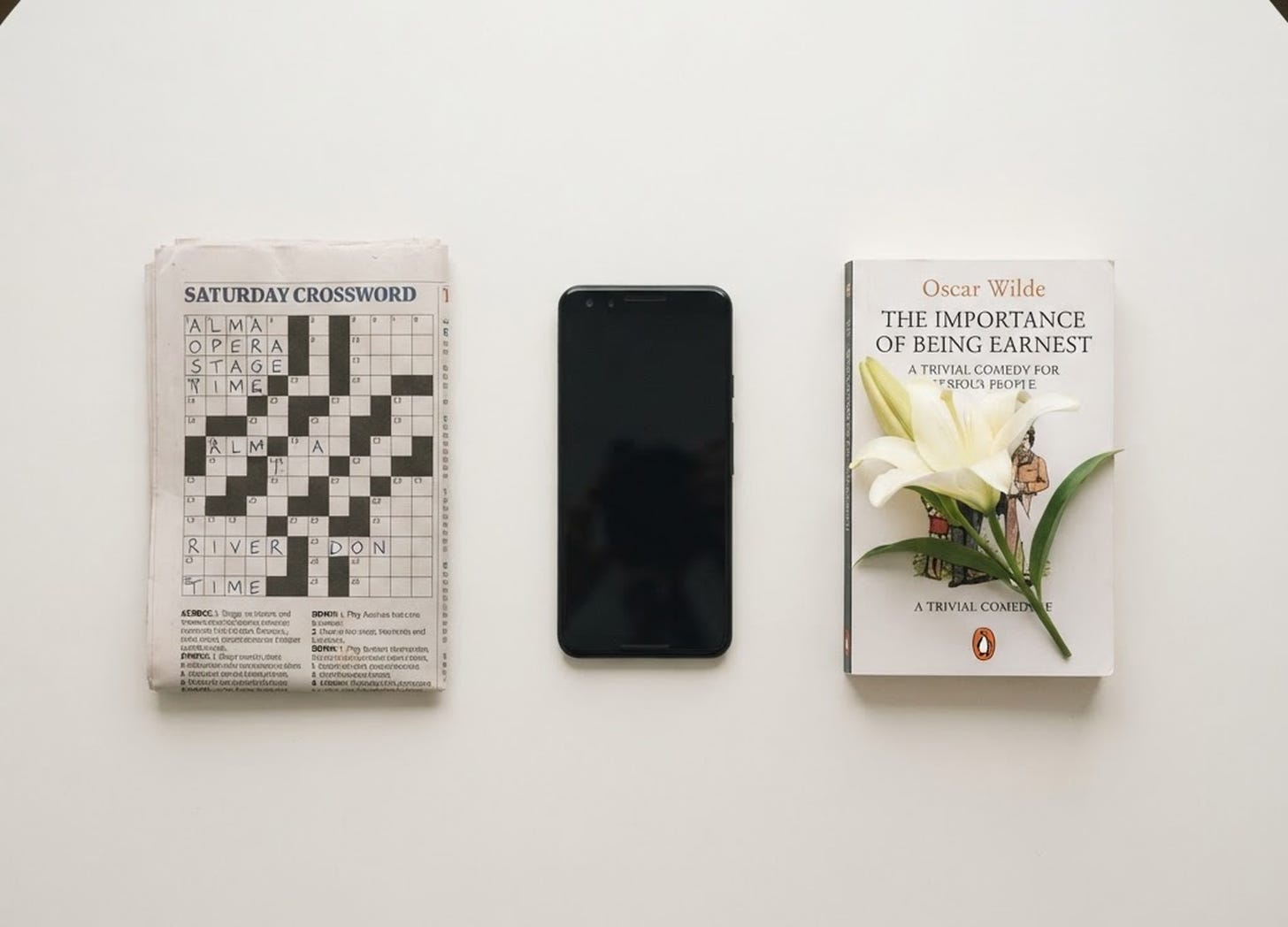
The name is Wilde Cards, named after Oscar Wilde. Each day brings a new literary quotation with one word excised. Players receive a handful of possible replacements and navigate three rounds of elimination. Lose a round? You can keep going. The real prize at the end isn’t a score: it’s a book. Every correct guess earns a volume for your in-game library; the edition depends on how much help you needed. Solve it cold and you take home the collector’s edition. Lean on a hint or two and you earn the hardcover. Need more scaffolding than that, and the paperback is yours. Run out of guesses entirely, and you walk away empty-handed.
The response so far has been genuinely gratifying. People are playing; people are enjoying it. My hope is that Wilde Cards becomes a small but sincere contribution to something larger: a culture that treats literary play as a legitimate part of daily life, not a rarefied pastime. The humanities deserve a seat at the popular table. A daily word game built on the insight of a post-structuralist literary theorist seems, to me, like a perfectly reasonable place to start.